







There’s a subtle shift happening beneath the surface of modern technology—one that isn’t driven by flashy interfaces or viral apps, but by the way decisions themselves are structured. At the center of this shift is hitaar, a concept gaining traction among forward-thinking founders and engineers who understand that the future isn’t just about data—it’s about how data informs action.
In its simplest form, hitaar represents a layered approach to decision-making systems, blending context, adaptability, and predictive intelligence into a unified framework. But in practice, it’s far more than a buzzword. It’s becoming a foundational principle for building resilient, intelligent platforms that can evolve alongside the complexity of the real world.
Understanding Hitaar in a Real-World Context
To understand hitaar, it helps to step away from theory and look at how decisions are actually made in dynamic environments. Traditional systems rely heavily on static logic: if X happens, do Y. This approach works in controlled conditions, but it quickly breaks down when variables multiply.
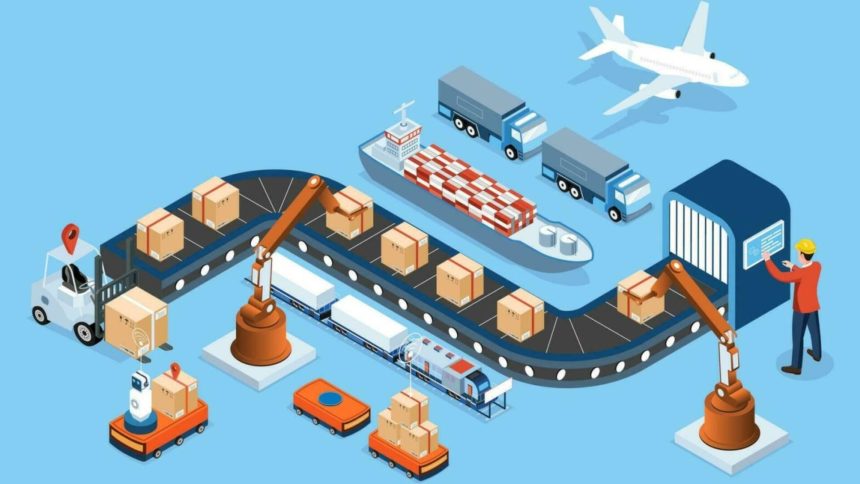
Hitaar introduces a different paradigm. Instead of rigid logic trees, it uses layered decision modeling—systems that continuously learn from inputs, adjust their priorities, and refine outcomes over time. Imagine a logistics platform that doesn’t just react to delays but anticipates them based on patterns, external signals, and historical behavior. That’s hitaar in action.
For startups, this shift is critical. Markets move fast, user behavior changes overnight, and competition evolves constantly. Static systems can’t keep up. Hitaar-based systems can.
The Core Philosophy Behind Hitaar
At its core, hitaar is built on three principles: contextual awareness, adaptive intelligence, and iterative refinement.
Contextual awareness means the system doesn’t evaluate data in isolation. It understands relationships—how one variable influences another. Adaptive intelligence allows the system to evolve its decision-making logic based on new data. Iterative refinement ensures that every decision improves the next.
This philosophy aligns closely with how humans make complex decisions, but with the added advantage of scale and speed. For tech professionals, this opens up new possibilities for designing systems that feel less mechanical and more intuitive.
Why Hitaar Matters for Startups
Startups operate in uncertainty. Whether it’s product-market fit, user acquisition, or scaling infrastructure, every decision carries risk. Hitaar reduces that risk by enabling smarter, faster, and more informed decisions.
Consider a SaaS startup optimizing pricing. A traditional model might rely on A/B testing alone. A hitaar-driven system, however, would incorporate user behavior, market trends, competitor pricing, and even seasonal patterns to recommend pricing adjustments in real time.
This isn’t just optimization—it’s strategic intelligence.
Hitaar vs Traditional Decision Systems
To fully appreciate the value of hitaar, it’s useful to compare it with conventional approaches.
| Feature | Traditional Systems | Hitaar-Based Systems |
|---|---|---|
| Decision Logic | Static, rule-based | Dynamic, context-aware |
| Adaptability | Low | High |
| Learning Capability | Limited | Continuous |
| Response Time | Reactive | Proactive |
| Scalability | Constrained by rules | Expands with data |
| Complexity Handling | Struggles with multiple inputs | Designed for multi-variable input |
This comparison highlights a key insight: hitaar isn’t just an upgrade—it’s a fundamentally different way of thinking about systems.
Building with Hitaar: Practical Applications
The beauty of hitaar lies in its versatility. It’s not confined to a single industry or use case. Instead, it acts as a framework that can be applied across domains.
In fintech, hitaar can power fraud detection systems that adapt to new attack patterns in real time. In healthcare, it can support diagnostic tools that refine their accuracy as more patient data becomes available. In e-commerce, it can drive recommendation engines that understand not just what users click, but why they click it.
For entrepreneurs, this means one thing: competitive advantage. Systems built on hitaar don’t just perform better—they learn faster.
The Role of Data in Hitaar Systems
No discussion of hitaar would be complete without addressing data. After all, data is the fuel that powers these systems. But hitaar doesn’t just consume data—it interprets it.
Traditional systems often treat data as a static input. Hitaar treats it as a living stream. It evaluates not just the data itself, but the context in which it exists. This distinction is crucial.
For example, a spike in user activity might signal growth in one context and system stress in another. A hitaar-based system understands the difference because it considers surrounding variables.
This deeper level of analysis transforms data from a passive resource into an active decision-making partner.
Challenges in Implementing Hitaar
Despite its advantages, adopting hitaar isn’t without challenges. The first is complexity. Designing systems that can handle layered decision-making requires a higher level of technical sophistication.
The second challenge is data quality. Hitaar systems are only as good as the data they receive. Poor data leads to poor decisions—only faster.
The third challenge is cultural. Organizations must shift from a mindset of control to one of trust. When systems begin to make adaptive decisions, leaders need confidence in the underlying logic.
These challenges are real, but they’re not insurmountable. In fact, they’re part of the transition toward more intelligent systems.
Hitaar and the Future of Intelligent Systems
Looking ahead, hitaar is poised to play a central role in the evolution of technology. As artificial intelligence continues to advance, the need for structured, adaptable decision frameworks will only grow.
We’re moving toward a world where systems don’t just execute commands—they collaborate with humans. Hitaar provides the architecture for this collaboration. It bridges the gap between raw data and meaningful action.
For tech professionals, this represents a shift in focus. The question is no longer “What can the system do?” but “How does the system decide what to do?”
That’s a much more powerful question.
Strategic Implications for Founders
For founders, embracing hitaar isn’t just a technical decision—it’s a strategic one. It influences how products are built, how teams operate, and how businesses scale.
A hitaar-driven startup is inherently more agile. It can respond to changes faster, identify opportunities earlier, and mitigate risks more effectively. This agility translates into resilience—a critical factor in today’s volatile markets.
Moreover, it creates a feedback loop where every action generates insight, and every insight improves future actions. This compounding effect is what sets high-performing startups apart.
Integrating Hitaar into Existing Systems
One common misconception is that adopting hitaar requires a complete system overhaul. In reality, it can be introduced incrementally.
Start by identifying decision points within your system—areas where outcomes could benefit from more context or adaptability. Then layer in hitaar principles: incorporate additional data sources, enable real-time analysis, and implement feedback mechanisms.
Over time, these incremental changes can transform the entire system.
The key is not to aim for perfection from the start, but to build a foundation that can evolve.
A New Standard for Digital Intelligence
As digital systems become more complex, the need for intelligent decision frameworks becomes unavoidable. Hitaar is emerging as a new standard—not because it’s trendy, but because it works.
It aligns with the realities of modern technology: constant change, increasing complexity, and the need for speed. It empowers systems to move beyond rigid logic and embrace adaptive intelligence.
For those willing to invest in it, the rewards are significant.
Conclusion: Why Hitaar Is More Than a Trend
Hitaar isn’t just another concept in the ever-expanding world of tech jargon. It’s a response to a real problem—the limitations of traditional decision systems in a complex, fast-moving world.
By introducing context, adaptability, and continuous learning into the decision-making process, hitaar transforms how systems operate. It enables smarter choices, faster responses, and more resilient outcomes.
For startup founders, entrepreneurs, and tech professionals, the message is clear: the future belongs to systems that can think, adapt, and evolve. Hitaar is the framework that makes that future possible.