









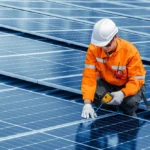

In the evolving world of renewable energy and smart infrastructure, innovation rarely comes from a single breakthrough. Instead, it emerges from combining existing systems in new and unexpected ways. The concept of zabor is solnechnyh paneley—literally a “fence made of solar panels”—is one of those hybrid ideas that quietly signals a major shift in how we think about space, energy, and infrastructure design.
For startup founders, entrepreneurs, and tech professionals, zabor is solnechnyh paneley is more than a construction idea. It represents a convergence of distributed energy generation, urban design efficiency, and decentralized sustainability. In a world where every square meter matters, turning boundary structures into power-generating assets is both practical and transformative.
What once was simply a perimeter marker is now becoming an energy-producing system.
Understanding Zabor is Solnechnyh Paneley in Practical Terms
At its simplest, zabor is solnechnyh paneley refers to integrating solar panels into fencing structures. Instead of treating fences as passive barriers, this approach transforms them into active energy-generating surfaces.
This concept is gaining traction in residential, commercial, and industrial applications. It allows property owners to maximize land utility without requiring additional rooftop or ground space for solar installations.
In practice, a solar fence may consist of vertically mounted photovoltaic panels integrated into a structural frame. These panels capture sunlight and convert it into electricity, just like traditional rooftop systems, but with a different spatial orientation.
The innovation lies not in the solar technology itself, but in how it is deployed.
Why Zabor is Solnechnyh Paneley Is Gaining Attention
The growing interest in zabor is solnechnyh paneley reflects broader trends in energy optimization and land-use efficiency. As urbanization increases and available space becomes more limited, the need for multi-functional infrastructure has never been greater.
Several factors are driving this shift.
First, energy independence is becoming a priority for homeowners and businesses alike. Rising electricity costs and grid instability are pushing users toward decentralized energy solutions.
Second, solar technology has become more affordable and efficient, making alternative installation methods more viable.
Third, governments in many regions are encouraging renewable energy adoption through incentives and regulatory support.
In this context, zabor is solnechnyh paneley emerges as a practical and scalable solution.
The Engineering Logic Behind Solar Panel Fences
From an engineering perspective, zabor is solnechnyh paneley is an exercise in spatial optimization. Traditional solar panels are typically installed on rooftops or large open ground areas. However, not all properties have ideal roof orientation or sufficient space.
Fences, on the other hand, are universally present. They define boundaries, provide security, and occupy linear space that is often underutilized.
By integrating solar panels into fence structures, developers can turn unused vertical surfaces into energy assets.
The table below compares traditional solar installations with solar fence systems:
| Feature | Rooftop Solar | Ground-Mounted Solar | Zabor is Solnechnyh Paneley |
|---|---|---|---|
| Space Requirement | Roof availability | Large land area | Existing fence line |
| Installation Complexity | Moderate | High | Moderate |
| Energy Efficiency | High (optimal angle) | High (adjustable angle) | Moderate to high |
| Security Function | None | None | Dual-purpose (energy + boundary) |
| Urban Suitability | High | Low | High |
This comparison highlights why solar fencing is particularly attractive in urban and suburban environments where space optimization is critical.
Zabor is Solnechnyh Paneley and the Shift Toward Multi-Functional Infrastructure
One of the most important trends in modern infrastructure design is multi-functionality. Infrastructure is no longer built for a single purpose. Instead, it is designed to serve multiple roles simultaneously.
Zabor is solnechnyh paneley fits perfectly into this paradigm. A single structure now serves as:
- A security barrier
- A renewable energy generator
- A design element in landscape architecture
- A potential smart grid component
This convergence of functions reflects a broader shift in how cities and properties are designed. Efficiency is no longer optional—it is essential.
For founders and innovators, this signals a growing opportunity in hybrid infrastructure solutions.
Technical Considerations and Design Challenges
While the concept of zabor is solnechnyh paneley is compelling, its implementation requires careful planning.
One of the primary challenges is orientation. Unlike rooftop panels, which can be angled optimally toward the sun, fence-mounted panels are typically vertical. This can reduce energy efficiency depending on geographic location and sunlight exposure.
Another challenge is structural integrity. Solar panels add weight and wind resistance, which must be accounted for in fence design.
There is also the issue of shading. Nearby buildings, trees, or structures can significantly impact energy output.
Finally, cost considerations play a role. While prices are decreasing, integrating solar technology into fencing systems still requires a higher upfront investment compared to traditional fences.
Despite these challenges, ongoing advancements in photovoltaic efficiency and lightweight materials are making zabor is solnechnyh paneley increasingly viable.
Applications of Zabor is Solnechnyh Paneley in Real-World Settings
The versatility of zabor is solnechnyh paneley allows it to be applied across multiple environments.
In residential settings, homeowners can use solar fences to power outdoor lighting, security systems, or even contribute to household electricity needs.
In commercial properties, solar fencing can help offset energy costs while enhancing perimeter security.
In industrial zones, large-scale installations can contribute significantly to on-site energy generation.
In agricultural environments, solar fences can serve dual purposes: protecting livestock or crops while generating electricity for farm operations.
Each use case demonstrates how flexible and adaptable this concept can be when properly implemented.
Economic and Environmental Impact
From an economic standpoint, zabor is solnechnyh paneley offers long-term cost savings. While initial installation costs may be higher than traditional fencing, the ability to generate electricity offsets ongoing energy expenses.
Over time, this can lead to significant return on investment, particularly in regions with high electricity prices or strong solar exposure.
Environmentally, the benefits are equally important. By expanding solar generation capacity without requiring additional land use, solar fences contribute to reduced carbon emissions and more efficient land utilization.
This aligns with global sustainability goals and the increasing demand for green infrastructure solutions.
The Role of Smart Technology in Solar Fencing
As infrastructure becomes more intelligent, zabor is solnechnyh paneley is evolving beyond passive energy generation.
Modern systems can integrate smart sensors, energy storage units, and IoT connectivity. This allows for real-time monitoring of energy production, system performance, and maintenance needs.
For example, smart solar fences can detect panel degradation, optimize energy distribution, and even integrate with home automation systems.
This convergence of solar energy and smart technology represents the next stage in infrastructure evolution.
Challenges in Scaling Zabor is Solnechnyh Paneley
Despite its potential, scaling zabor is solnechnyh paneley across broader markets presents challenges.
Regulatory frameworks may not yet fully account for hybrid infrastructure systems. Building codes and zoning laws can vary significantly between regions.
There is also a need for standardization. Without consistent design and installation standards, adoption may remain fragmented.
Consumer awareness is another barrier. Many property owners are still unfamiliar with the concept and its benefits.
Addressing these challenges will require collaboration between policymakers, engineers, and energy companies.
The Future of Zabor is Solnechnyh Paneley in Smart Cities
Looking ahead, zabor is solnechnyh paneley is likely to play a role in the development of smart cities. As urban environments become more connected and energy-efficient, every surface will be evaluated for its functional potential.
Fences, walls, and boundaries will no longer be passive structures. Instead, they will become active contributors to energy ecosystems.
We may also see integration with decentralized energy grids, where solar fences feed electricity directly into local microgrids.
For startups and innovators, this opens up opportunities in hardware design, energy management software, and infrastructure-as-a-service models.
Conclusion
The concept of zabor is solnechnyh paneley represents a powerful shift in how we think about space, energy, and infrastructure. By transforming simple boundary structures into energy-generating assets, it challenges traditional assumptions about land use and design.
For entrepreneurs and tech professionals, this is more than a construction innovation—it is a glimpse into the future of integrated, multi-functional systems.
As technology advances and sustainability becomes a global priority, solutions like solar fencing will move from experimental concepts to mainstream infrastructure.
In the end, zabor is solnechnyh paneley is not just about fences or solar panels. It is about reimagining the boundaries of what infrastructure can do.

