Politics
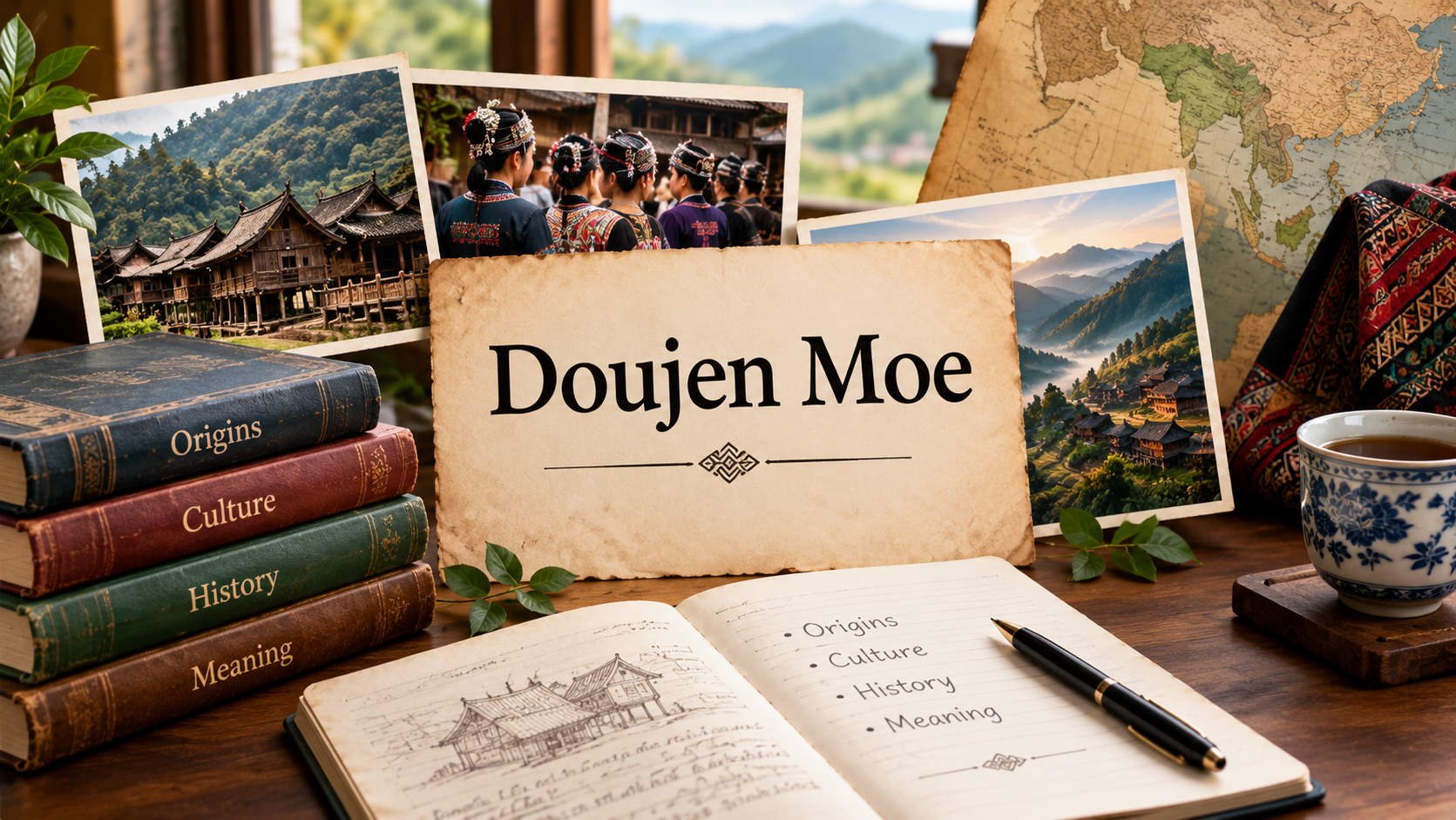
Doujen Moe Meaning, Origins, Culture, History, and What the Term Really Means

Introduction
The phrase doujen moe can be confusing because it looks like the name of a specific Japanese anime genre, website, or established fandom movement. Search results also use the term in different ways, which makes it difficult to determine what it actually means.
The key is to separate the phrase into its better-established cultural components: doujin and moe.
Doujin is a Japanese term associated with people who share an interest and, in modern popular culture, with independently produced or self-published creative works. These can include manga, books, illustrations, games, music, and other forms of media. Comic Market, commonly known as Comiket, describes itself as a marketplace centered on non-commercial, self-published works and has supported this type of creative activity since its beginning in 1975.
Moe, meanwhile, describes an emotional relationship with fictional characters. Academic writing has used the term to describe affection toward two-dimensional characters and an affective relationship between viewers and fictional worlds.
The spelling “doujen” is less standard than “doujin.” As a result, someone searching for doujen moe may be looking for information about doujin culture, moe characters, doujinshi, fan-created art, or a particular online reference using that spelling.
That distinction matters. The two underlying concepts have documented cultural histories, while the combined phrase doujen moe does not have one universally established definition.
Direct Answer: What Is Doujen Moe?
Doujen moe is best treated as an ambiguous internet phrase associated with the broader concepts of doujin and moe. Doujin relates to independent or self-published creative activity, while moe describes an emotional affection or attachment toward fictional characters or character qualities. The spelling “doujen” is a less-standard form of “doujin,” and the combined phrase is not a clearly standardized Japanese genre or official cultural category.
What Does “Doujen” Mean?
The first part of the keyword creates much of the confusion.
The established Japanese word is 同人, commonly romanized in English as doujin or dōjin. The word has a broader meaning connected to people sharing an interest, activity, or community. In popular culture, it became strongly associated with independent creative communities and self-published works.
“Doujen” is not the usual romanization.
That does not necessarily mean that every use of “doujen” is meaningless. Internet searches frequently contain:
- Alternative spellings
- Phonetic spellings
- Typing mistakes
- Search-engine variations
- Recollections of older website names
- Informal terminology created by online communities
Current search results for doujen moe show exactly this problem: some pages describe it as a combination of doujin and moe, while others connect it with older online references. Because these descriptions are inconsistent, the underlying terms provide a more reliable way to understand the subject.
Doujin Is Broader Than Fan Art
One of the most common mistakes is assuming that doujin simply means “fan art.”
It can include fan-created works, but the concept is broader.
Independent creators may produce:
- Manga
- Comics
- Novels
- Illustration books
- Music
- Games
- Software
- Original characters
- Original stories
- Fan-created works based on existing franchises
Comiket’s own historical material describes the event as a space for individual creative work and communication between fans and creators.
That makes independent creation a more useful concept than simply calling doujin “fan art.”
What Is Moe?
The second important word is moe.
Moe, written 萌え in Japanese, is commonly associated with an emotional response toward fictional characters.
That response can involve affection, attachment, fondness, protectiveness, or a strong emotional interest in particular character qualities.
Academic discussions have treated moe as an affective relationship between audiences and fictional characters. One Oxford Academic discussion describes moe in terms of affection toward two-dimensional characters and an internalized emotional response to fictional beings.
More recent academic research similarly describes moe as an affective or relational concept involving viewers and fictional characters.
Moe Is More Than “Cute”
Moe is often translated or explained online as “cute,” but that is incomplete.
The Japanese concept of kawaii is more directly associated with cuteness. Moe is better understood as the emotional reaction a person develops toward a character or certain qualities of that character.
For example, a viewer might feel particularly attached to a fictional character because of:
- A gentle personality
- Shyness
- Vulnerability
- Kindness
- Innocence
- Humor
- Loyalty
- A distinctive personality trait
- A character’s relationship with others
The exact response depends on the individual.
This is why describing moe as simply an art style can miss an important part of the concept: the audience’s emotional response matters.
How Do Doujin and Moe Relate?
Once the two words are understood separately, the phrase becomes much easier to interpret.
Doujin describes a creative or community context.
Moe describes an emotional response toward fictional characters.
They can overlap when independent creators make works centered around characters, relationships, personalities, or themes designed to create a strong emotional connection.
However, that does not mean that all doujin works are moe.
It also does not mean that all moe-related media is doujin.
A useful way to visualize the relationship is:
| Term | Primary Meaning | Main Focus |
| Doujin | Shared-interest/independent creative culture | Creation and community |
| Doujinshi | Self-published creative work | Publication |
| Moe | Emotional affection toward fictional characters | Audience response |
| Doujin + Moe | Overlap between the two concepts | Character-focused independent creativity |
| Doujen Moe | Ambiguous online phrase | Context-dependent meaning |
This distinction prevents the keyword from being treated as a formal genre when the evidence does not support that conclusion.
Is Doujen Moe an Official Japanese Term?
There is no strong evidence that “doujen moe” is a standardized Japanese cultural term with a single official definition.
This is one of the most important facts for anyone researching the keyword.
The underlying terms are real and well established:
- Doujin is an established Japanese term.
- Doujinshi is an established term for independently published works.
- Moe is an established concept in Japanese popular culture and academic discussion.
- Doujen moe, however, is much less standardized.
Recent web pages often describe the phrase as a blend of independent fan creativity and moe aesthetics, but those pages are secondary online explanations rather than evidence that Japanese cultural institutions recognize “doujen moe” as a formal category.
Therefore, the most accurate approach is to describe it as an ambiguous or informal online expression rather than a formal anime genre.
A Brief History of Doujin Culture
To understand why terms such as doujinshi appear so often in anime and manga discussions, it helps to look at the development of independent publishing in Japan.
The Beginning of Comiket
One of the most important milestones is Comic Market, better known as Comiket.
The first Comic Market was held on December 21, 1975. According to Comiket’s official historical record, the first event had 32 participating circles and approximately 700 participants.
Comiket emerged partly because its organizers believed existing manga events offered limited space for experimental and diverse creative work. The event created a place where creators and fans could share personally produced works directly.
This history is important because it demonstrates that doujin culture was not created by today’s social media platforms.
The internet later changed how creators distributed and discovered independent work, but the underlying culture of fan participation and self-publishing has much deeper roots.
From Small Gathering to Major Cultural Event
Comiket grew dramatically over the following decades.
Official Comiket material records the expansion from the original 32 circles and approximately 700 participants to much larger events involving thousands of circles and large audiences.
By 2025, Comiket’s official materials described the event as having reached its 50th anniversary year.
This long history helps explain why doujin culture is an important part of Japanese manga, anime, and game communities.
What Is Doujinshi?
Doujinshi refers to independently published creative works.
The term is particularly associated with manga and comics, but doujin culture extends beyond printed comics.
A doujinshi might be:
- An original comic
- A fan-created manga
- A short story
- An illustration collection
- A parody
- A character-focused work
- A collection of independent writing
Some works use characters or worlds from established franchises, while others are completely original.
Original vs. Derivative Doujin Works
This distinction is especially important.
Original doujin work uses characters, settings, and stories created by the independent creator.
Derivative doujin work builds upon an existing fictional property.
For example, an artist might independently create a new fantasy manga with original characters. That can exist within doujin culture.
Another artist might create a comic using characters from an established anime franchise. That is also part of the broader doujin ecosystem.
Therefore, doujin does not automatically mean derivative.
Is All Doujin Content Fan-Made?
No.
This is a common misconception.
Some doujin works are fan creations, but independent creators also publish original material.
Comiket’s historical material emphasizes personal and self-produced creative work rather than defining doujin solely as derivative fan material.
That means a creator can participate in doujin culture without basing the work on an existing commercial franchise.
Is Doujin the Same as Professional Publishing?
Not exactly.
The traditional distinction is that doujin activity gives individuals and small groups greater control over what they create and how they distribute it.
A major publishing company may control:
- Editorial selection
- Printing
- Distribution
- Marketing
- Commercial licensing
An independent creator can have much more direct control over a doujin work.
That independence can make doujin culture attractive to artists who want to experiment with ideas that may not fit conventional commercial publishing.
It also creates a closer relationship between creator and audience.
Does Doujin Mean Adult Content?
No.
This is another misconception that frequently appears in online discussions.
Doujin is a broad category of independent creative activity. It can include:
- Comedy
- Romance
- Fantasy
- Science fiction
- Slice-of-life stories
- Fan comics
- Original manga
- Illustration collections
- Music
- Games
Some doujin works contain mature themes, but adult content represents only one portion of the broader ecosystem.
Therefore, the word doujin alone does not tell you what kind of content a specific work contains.
Is Moe Always Sexual?
No.
Moe can sometimes appear in discussions involving attraction, romance, or sexuality, but the concept itself is broader.
Academic discussions describe moe as an emotional relationship or affection toward fictional characters.
A character can evoke moe because the audience finds that character:
- Endearing
- Vulnerable
- Funny
- Kind
- Shy
- Caring
- Emotionally compelling
So it is inaccurate to use “moe” as a direct synonym for sexual content.
Why the Phrase “Doujen Moe” Is Confusing
There are several reasons.
1. The Spelling Is Unusual
The established spelling is generally doujin, not doujen.
That alone can cause search results to become inconsistent.
2. The Two Words Have Different Functions
Doujin describes a creative and community context.
Moe describes an emotional response.
Combining them does not automatically create a formal genre.
3. Internet Sources Use the Phrase Differently
Current search results show some websites describing doujen moe as a fan-art aesthetic, while others discuss it as an ambiguous search phrase or connect it to an older online identity.
Because these sources are not consistent, readers should avoid assuming that the first definition they see is universally accepted.
4. Old and New Internet References Can Mix
A search keyword can survive even after the original context changes.
Someone may remember an old website or online community, while another person uses the same phrase to describe a cultural concept.
That can make a single search term appear to have several unrelated meanings.
Is There a “Doujin Moe” Style?
The phrase doujin moe can reasonably be used informally to describe independent creative work that strongly emphasizes moe-related character appeal.
For example, an independent artist could create a short manga focused on the everyday life of a shy fictional character.
The work might emphasize:
- Facial expressions
- Character personality
- Small emotional moments
- Friendship
- Comfort
- Everyday interactions
- Character relationships
A fan community might describe such material as having a moe-oriented appeal.
But that does not establish “doujin moe” as a formal artistic classification.
The distinction between describing a type of content and naming an official genre is important.
How Doujin and Moe Work Together in Practice
Consider a fictional example.
An independent artist creates a short manga about an original character who is shy but supportive of her friends.
The creator publishes the comic independently.
Readers become attached to the character because of her personality and emotional behavior.
In that situation:
- The independent publication fits the broader doujin context.
- The emotional attachment can be described using the concept of moe.
- Someone could informally call the work doujin moe.
But the last label is descriptive rather than an official classification.
That is the simplest way to understand the relationship.
Doujin Moe and Online Communities
The internet has greatly expanded the reach of independent Japanese creative culture.
Artists can now distribute work digitally rather than relying only on physical conventions.
Online communities can also allow creators to:
- Share illustrations
- Publish comics
- Communicate with readers
- Build fan communities
- Receive feedback
- Promote original characters
- Experiment with new formats
This makes it easier for people outside Japan to encounter doujin culture.
However, international audiences can also introduce new terminology and spelling variations.
That is one reason terms such as doujin, doujen, and dojin may appear side by side.
Copyright: An Important Part of the Discussion
Copyright becomes particularly relevant when independent works use characters, artwork, music, stories, or other material belonging to someone else.
A creator making an original work generally has a different legal situation from someone reproducing another person’s copyrighted material.
Similarly, a fan-created work may involve different legal questions depending on the country and circumstances.
The U.S. Copyright Office explains that copyright includes exclusive rights involving reproduction, distribution, public performance, and public display, subject to applicable limitations and exceptions.
A derivative work can also raise additional copyright considerations when it is based on an existing copyrighted work.
The exact legal position varies by jurisdiction, so it would be misleading to say that all doujin works are either automatically legal or automatically illegal.
Why This Matters for Readers
If you encounter a website distributing fan-created material, ask:
- Who created the work?
- Is the creator identified?
- Is the work original or based on another property?
- Does the site explain its distribution rights?
- Is the material being offered with the creator’s permission?
- Are downloads involved?
- Does the website clearly identify its operator?
These questions are more useful than simply asking whether something is “doujin.”
Is Doujen Moe Safe?
The phrase itself cannot be labeled safe or unsafe because doujen moe is not one specific website or application.
Safety depends on what the user actually encounters.
A search result might lead to:
- An informational article
- An artist portfolio
- A community page
- A digital marketplace
- A discussion forum
- A file-sharing site
- An unfamiliar archive
Those websites can have very different security and privacy characteristics.
Basic Safety Rules
When visiting unfamiliar websites, especially sites offering downloads:
- Check the exact domain.
- Avoid unexpected executable downloads.
- Do not install unknown browser extensions.
- Be cautious with aggressive pop-ups.
- Avoid entering passwords into unfamiliar pages.
- Do not provide unnecessary personal information.
- Keep your browser and security software updated.
- Check whether the site clearly identifies its operator.
- Treat claims of being “official” or “authorized” as claims that should be verified.
- Remember that HTTPS encrypts a connection but does not by itself prove that the website is trustworthy.
How to Evaluate a Website Appearing for “Doujen Moe”
If your real search intent is to understand a specific website that appears for this keyword, use a structured process.
Step 1: Identify the Exact Domain
Do not evaluate a website based only on its name.
Look at the complete domain and spelling.
Step 2: Determine What the Website Actually Does
Is it:
- A blog?
- An artist portfolio?
- A community?
- A marketplace?
- A file archive?
- A streaming site?
- A download service?
The website’s actual function matters more than its keyword.
Step 3: Identify the Content Source
Look for author names, artist names, publisher information, or creator credits.
Step 4: Check Copyright Information
If a site distributes third-party work, determine whether it provides any information about permissions or licensing.
Step 5: Review Security Signals
Look for suspicious redirects, unexpected downloads, fake browser alerts, or requests for unnecessary information.
Step 6: Separate Reputation From Search Visibility
A website can rank in search results without being an official source.
Search engine visibility is not proof of legitimacy.
Common Mistakes About Doujen Moe
Mistake 1: Treating Doujen Moe as a Formal Anime Genre
The phrase is not well established as a standardized Japanese genre.
Mistake 2: Assuming Doujen Is the Standard Japanese Spelling
Doujin is the more established romanization of 同人.
Mistake 3: Saying Doujin Means Only Fan Art
Doujin culture includes original and derivative creative works.
Mistake 4: Saying All Doujin Content Is Adult
Doujin is a broad creative category and includes many non-adult works.
Mistake 5: Equating Moe With Cuteness Alone
Moe involves an emotional response to fictional characters, not merely visual cuteness.
Mistake 6: Assuming Every Fan Work Is Automatically Legal
Copyright questions depend on the work, rights involved, jurisdiction, and circumstances.
Mistake 7: Believing Every Search Result Uses the Phrase Correctly
Online terminology can be inconsistent, particularly for uncommon keywords.
Mistake 8: Assuming the Phrase Refers to One Website
Search results can mix cultural explanations, websites, communities, and historical references.
Real-World Example: Understanding a Search Result
Imagine someone searches “doujen moe” because they saw the phrase in an anime forum.
The search returns three pages.
Page A explains doujin culture and moe.
Page B belongs to an independent artist who publishes original manga.
Page C is an unfamiliar website offering downloadable content.
It would be incorrect to assume that all three pages represent the same thing.
Page A is informational.
Page B represents independent creative activity.
Page C should be evaluated separately for ownership, licensing, security, and privacy.
The keyword only explains why the pages appeared in the search. It does not prove that they are affiliated.
Doujen Moe vs. Related Terms
Understanding related terminology makes online research much easier.
| Term | Meaning | Example |
| Doujin | Shared-interest or independent creative culture | Independent manga or game |
| Doujinshi | Self-published creative publication | Fan comic or original manga |
| Moe | Emotional affection toward fictional characters | Strong attachment to a character |
| Kawaii | Cuteness or an appealing quality | Cute character design |
| Otaku | A person deeply involved in a particular interest or subculture | Anime or manga enthusiast |
| Fan art | Artwork made by fans around existing media | Illustration of an anime character |
| Original work | Creative work using the creator’s own characters/world | Independent manga |
| Derivative work | Work based on an existing creative property | Fan-created story using established characters |
These terms can overlap, but they are not interchangeable.
Why Doujin Culture Remains Important
Doujin culture provides an alternative route for creative expression.
Creators can experiment without necessarily following the same structures used by major commercial publishers.
That can encourage:
- New storytelling ideas
- Unusual character concepts
- Experimental art
- Niche genres
- Community interaction
- Direct creator-to-reader relationships
Comiket’s own history emphasizes individual creative expression, cooperation among participants, and communication between creators and fans.
This helps explain why the doujin ecosystem has remained culturally significant for decades.
A Simple Way to Remember the Difference
If the terminology feels confusing, use this shortcut:
Doujin = independent creative culture.
Doujinshi = independently published work.
Moe = emotional attachment to fictional characters.
Doujen moe = an ambiguous online phrase that may refer to the overlap between those ideas.
That explanation is more accurate than treating “doujen moe” as the name of a single official anime genre.
Frequently Asked Questions
What is doujen moe?
Doujen moe is an ambiguous internet phrase commonly associated with doujin and moe culture. It may describe independent or fan-created work with a strong character-focused or emotionally appealing quality, but it does not have one universally accepted formal definition.
Is doujen moe a real Japanese term?
The underlying words are real Japanese cultural terms, but doujen moe itself is not strongly established as a standardized Japanese term. “Doujin” is the more established spelling.
What is the correct spelling: doujen or doujin?
Doujin is the standard spelling most commonly used in English for 同人. “Doujen” can appear as an online variation, phonetic spelling, or search term.
What does doujin mean?
Doujin can refer broadly to people who share an interest and, in popular culture, to independent or self-published creative activity.
What is doujinshi?
Doujinshi refers to independently published creative works, especially manga, comics, and related publications.
What does moe mean?
Moe describes an emotional response of affection or attachment toward fictional characters or qualities associated with them. Academic research treats it as an affective relationship between audiences and fictional characters.
Is moe the same as kawaii?
No. The concepts can overlap, but they are not identical. Kawaii is associated more directly with cuteness, while moe concerns an emotional response or attachment toward a character.
Is doujin the same as fan fiction?
No. Doujin culture is broader. It includes original works as well as fan-created and derivative works.
Is all doujin content adult?
No. Doujin culture includes many genres and formats, including non-adult manga, games, music, novels, illustrations, and original works.
Is moe always sexual?
No. Moe can involve affection, emotional attachment, protectiveness, or fondness toward fictional characters without being sexual.
Is doujin legal?
Doujin activity is not automatically illegal. However, individual works can raise copyright issues, particularly when they use protected material from existing franchises. The applicable law depends on the jurisdiction and circumstances.
Is doujen moe a website?
Not necessarily. The phrase can refer to a search term or cultural concept, and some online references may use it in connection with particular websites or historical online identities. A specific website should be evaluated separately rather than assuming that every use of the keyword refers to it.
Why do search results give different meanings for doujen moe?
The phrase is not standardized, and “doujen” itself is a less-common spelling. Search engines can therefore combine results about doujin culture, moe, fan art, websites, and other related subjects.
Can doujin works be original?
Yes. Independent creators can publish original manga, stories, games, music, illustrations, and other works.
Where did modern doujin culture develop?
Modern doujin culture has roots in Japanese fan and self-publishing communities. Comic Market began in Tokyo in December 1975 and became a major marketplace for doujinshi and independent creative expression.
Why is Comiket important?
Comiket is one of the most significant events associated with doujin culture. It provides a large-scale environment for creators and fans to exchange self-published works and has operated since 1975.
Key Facts About Doujen Moe
- Doujen moe is not a clearly standardized Japanese genre.
- Doujin is the more established spelling of 同人.
- Doujin culture includes independent and self-published creative work.
- Doujinshi commonly refers to independently published creative works.
- Doujin works can be original or based on existing franchises.
- Moe describes an emotional response or attachment toward fictional characters.
- Moe is not simply another word for “cute.”
- Moe is not automatically sexual.
- Doujin does not automatically mean adult content.
- Comiket began in 1975 as a space for creative expression and communication among manga fans and creators.
- The exact phrase doujen moe has multiple online interpretations.
- A search result is not proof that a website is official, authorized, safe, or affiliated with Japanese doujin culture.
- Copyright questions depend on the specific work, rights involved, jurisdiction, and circumstances.
Key Takeaways
- Doujen moe is best understood as an ambiguous online phrase rather than a formal Japanese genre.
- The phrase becomes easier to understand when separated into doujin and moe.
- Doujin is connected to shared-interest communities and independent creative production.
- Doujinshi refers to self-published creative works.
- Moe describes emotional affection or attachment toward fictional characters.
- Independent creators can produce both original and derivative works.
- Not every doujin work is fan art, and not every doujin work is adult.
- Moe should not automatically be interpreted as sexual.
- “Doujen” is a less-standard spelling than “doujin.”
- Comiket’s history demonstrates that Japanese doujin culture has existed for decades, long before today’s social-media platforms.
- When researching a website associated with the keyword, evaluate the actual domain, ownership, content source, licensing, privacy practices, and security separately.
Conclusion
Doujen moe is a keyword that looks more precise than it actually is. Its meaning becomes clearer when the established concepts behind it are examined separately.
Doujin refers to a broad culture of shared interests and independent creative production, including self-published manga, games, music, literature, illustrations, and other works. Moe describes an emotional response toward fictional characters and qualities that make those characters particularly appealing or endearing.
The spelling doujen adds another layer of uncertainty because doujin is the more established romanization of 同人. As the phrase has spread through international internet communities, different websites have started using “doujen moe” to describe somewhat different ideas.
For that reason, it is better not to force the keyword into one rigid definition. In a fandom context, it can reasonably describe the overlap between independent doujin creativity and moe-oriented character appeal. In another context, it may simply be a search variation or reference to a particular online source.
The most reliable way to research the topic is to start with the well-documented meanings of doujin, doujinshi, and moe, then examine the specific context in which “doujen moe” appears. That approach avoids the most common mistake: treating an ambiguous internet phrase as though it were a formally recognized Japanese cultural category.
Ultimately, the interesting part of the subject is not the spelling alone. It is the larger culture behind it—the ability of independent creators and highly engaged audiences to build, share, and respond to fictional worlds outside the boundaries of traditional commercial publishing.

Casino online cz: Úloha RNG v spravedlnosti
Crownplay-Inspired Fashion and Merchandise Trends: A Deep Dive into Royale Casino
Internationella spelare på casino utan svensk licens: En växande trend inom sportens värld

crackedstreams.to What It Is, How It Works, Safety, Legality, and Risks

Reaperscan Manga What Reaper Scans Was, Why It Shut Down, and What Readers Should Know

Doujen Moe Meaning, Origins, Culture, History, and What the Term Really Means
-
 Tech3 weeks ago
crackedstreams.to What It Is, How It Works, Safety, Legality, and Risks
-
 Uncategorized3 weeks ago
Reaperscan Manga What Reaper Scans Was, Why It Shut Down, and What Readers Should Know
-

 Tech3 weeks ago
Xlecz Meaning, Uses, Online Presence, and What the Evidence Shows
-
Uncategorized3 days ago
Топ советы для новых игроков в Pinco Casino
-
Uncategorized3 days ago
Как использовать бонусы после 1win скачать?
-
Uncategorized3 days ago
Übersicht über Sportwetten ohne Lugas: Fehler vermeiden
-
Uncategorized3 days ago
Finding the Best Online Casinos with Innovative User Interfaces
-
Uncategorized3 days ago
Pinco İndir İlə E-Ticarət Potensialını Artırmaq