







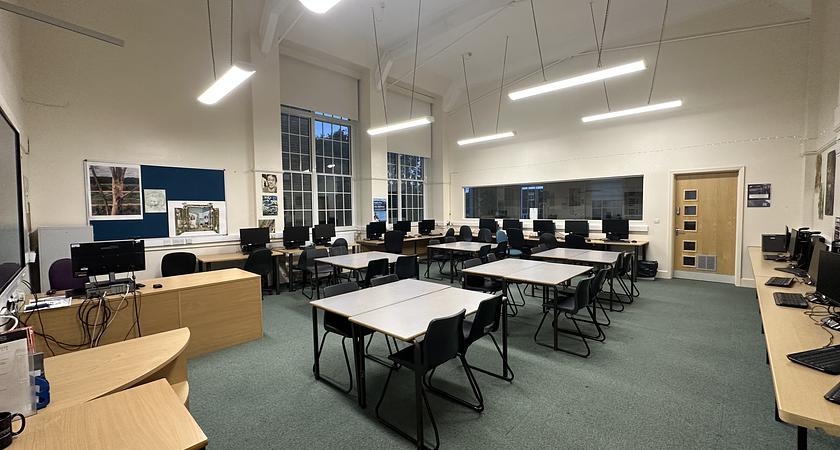
That was the reality I walked into every Monday morning for years. Third period, 30 students, mixed abilities, a couple of kids on IEPs, a few whose first language wasn’t English, and one boy in the back who I swear came to class purely for the air conditioning.
When I first came across the concept of “Classroom 30x” — essentially a framework for multiplying teaching effectiveness when you’re dealing with large, diverse classrooms — I was skeptical. I’d heard about a dozen other “revolutionary” teaching methods before. Most of them worked beautifully in a class of 12 volunteers in a university demonstration. Not so much when you’ve got Marcus flicking erasers and half the class still confused from last Tuesday’s lesson.
But I tried it anyway. And I want to tell you honestly what happened — the good, the unexpected, and the moments I genuinely wanted to close the classroom door and cry.
What “Classroom 30x” Actually Means
Before anything else — let me clear this up, because when I first searched for it, I found a mix of interpretations. At its core, Classroom 30x is about designing your instruction so that your impact is multiplied across every student, not just the loudest ones or the most advanced ones. The “30x” idea is that with the right structure, a single teacher can effectively reach 30 students at once — not by shouting harder, but by working smarter.
Some people apply it to physical classroom layout. Others use it as a framework for differentiated instruction. I’ve even seen it referenced in EdTech circles as a way to use technology to create 30 simultaneous learning pathways. In my case, I used it as a blend of all three — and tweaked it heavily based on what my actual 30 kids needed.
What it really means for teachersClassroom 30x isn’t a rigid system. It’s a mindset: how do I set up this environment so my energy goes further and more students genuinely engage — not just sit quietly?
How I Set It Up: My Step-by-Step Approach
I didn’t overhaul everything overnight. That would’ve been a disaster. Instead, I phased it in over about six weeks. Here’s roughly what I did:
- 1Mapped my students into three loose tiers. Not by “intelligence” — I hate that framing — but by where they were right now in their understanding of the subject. I used exit tickets from the first two weeks to sort this out quietly. No student knew which tier they were in.
- 2Redesigned my room layout. I moved from traditional rows to a horseshoe with a central cluster. This sounds small but it changed everything. I could now make eye contact with every student during a lesson without walking to the back. Students could also see each other, which helped enormously with discussion-based activities.
- 3Introduced “anchor tasks.” These are self-directed activities — often on paper, sometimes on a device — that students can work on independently while I pulled small groups. The trick is that anchor tasks have to be genuinely engaging, not busywork. It took me four attempts to get this right.
- 4Used micro-rotations. Every 12–15 minutes, one group rotated to work with me directly while others continued their anchor tasks or peer collaboration. 12 minutes sounds short, but focused direct instruction for 8–10 kids is incredibly effective versus 30 minutes of whole-class lecture.
- 5Introduced structured noise levels. I used a simple visual chart on the board — silent, whisper, pair-share, full discussion. Students knew at a glance what was appropriate. This eliminated about 80% of my “shushing” and the mental energy that went with it.
- 6Closed each class with a two-minute reflection prompt. Not a quiz — just a sticky note answer to “What confused you today?” or “What clicked?” This gave me real data to plan the next lesson without adding any marking time to my evenings.
The Tools That Actually Helped
I’m not sponsored by anyone — these are just what I genuinely found useful in a real classroom with a real budget (which is to say, almost no budget).
Google Slides
For anchor task instructions students could access on shared devices or the board at their own pace.
Nearpod
Allowed me to push interactive questions to student devices mid-lesson — a lifesaver for checking understanding quickly.
Padlet
Students posted reflections and ideas digitally. Quiet kids who never raised their hand suddenly had a voice.
Whiteboard paint
I painted one wall. Game changer for group work — every surface became a workspace.
Simple timers
A visible countdown on the projector kept rotations honest and reduced transition chaos significantly.
Sticky notes (physical)
Sometimes the best tech is analog. Exit reflections, peer feedback, question walls — nothing beats a sticky note for speed.
What Surprised Me (Good and Bad)
The positive surprise: the quieter students completely transformed. When the class isn’t always a whole-group performance, shy kids thrive. One girl — I’ll call her Aisha — hadn’t spoken aloud in class since September. By week four of micro-rotations, she was actively leading peer discussions. I nearly fell off my chair.
The negative surprise: it’s exhausting to set up. The first three weeks, I was spending two extra hours every Sunday planning anchor tasks, organizing materials, and mapping who needed what. It got easier — but don’t let anyone tell you differentiated instruction is low-effort once you get rolling. It isn’t. You just get better at it.
Also — and this is important — some students genuinely struggled without the traditional structure. One student, very high-achieving but anxious, hated the ambiguity of peer tasks. He needed explicit instructions for every minute or he’d spiral. That taught me that Classroom 30x can’t be one-size-fits-all either. You have to build flexibility into the flexibility.
The Mistakes I Made (So You Don’t Have To)
Common mistakes to avoid
- Trying to change the room layout AND the routines AND the technology all in the same week — pick one thing at a time.
- Making anchor tasks too easy (students finish in 4 minutes and chaos ensues) or too hard (they give up and chat).
- Forgetting to explicitly teach students how to work independently — they need practice at this, especially younger ones.
- Not communicating the “why” to students — when kids understand the purpose of a structure, they buy in dramatically more.
- Skipping the reflection step when you’re short on time. That’s precisely when you need it most.
- Assuming it’ll work identically for every class you teach. My Period 3 class needed different structures than Period 5 with the same content.
Real Results After One Semester
By December, my class average on unit assessments had improved meaningfully compared to the same unit the previous year. But honestly? The number that moved me more was the engagement rate. When I looked back at my own class notes, I had flagged 11 students in September as “frequently disengaged.” By December, that number was down to 3.
Three is still not zero. And those three students needed something beyond what any classroom framework was going to solve alone — one of them was dealing with things at home that made schoolwork genuinely secondary, understandably so.
But 11 down to 3? In one semester? That felt real.
Is Classroom 30x Worth It for You?
If you’re teaching a small, relatively homogeneous group — honestly, maybe not. The overhead of planning micro-rotations and differentiated tasks doesn’t pay off the same way when you’ve got 15 kids who are all more or less at the same point.
But if you’re staring down a roster of 28–35 students with wildly different levels, languages, and learning needs — and you feel like you’re constantly teaching to the middle while the top and bottom thirds drift — then yes. Absolutely yes. The investment in setup pays dividends in classroom calm, student engagement, and your own sanity by term three.
Start small. Pick one element. Maybe it’s just the horseshoe layout. Maybe it’s just the noise-level chart. Give it three weeks before you judge it. Teaching frameworks almost never reveal their value in the first week — they need time to become routine before they become powerful.
And when Marcus in the back row finally starts turning around to help his tablemate instead of flicking erasers? You’ll know something real has shifted.